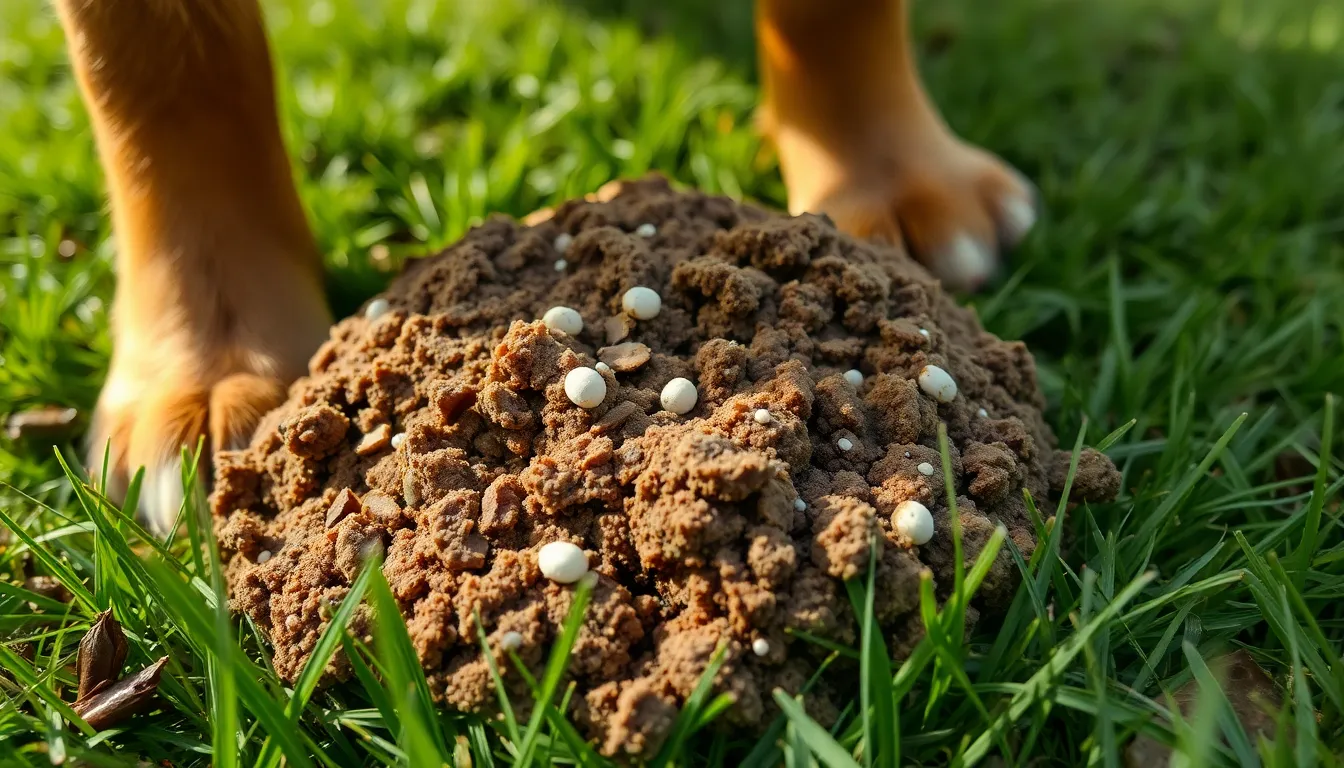
Spotting white dots in dog poop can be alarming for pet owners. These unusual specks often raise questions about a dog’s health and diet. While some might brush it off as a minor issue, understanding the cause behind these white dots is crucial for maintaining a pet’s well-being.
The appearance of white dots can indicate various conditions, from harmless dietary remnants to potential health concerns. Identifying the source is essential for ensuring that a dog remains healthy and happy. By delving into the reasons behind this phenomenon, pet owners can make informed decisions about their furry friends’ care and seek veterinary advice when necessary.
Table of Contents
ToggleUnderstanding White Dots in Dog Poop
White dots in dog poop can indicate various issues, ranging from benign to serious. Recognizing these causes helps pet owners determine the appropriate course of action.
Common Causes
- Dietary Remnants: Undigested food, such as grains or bone fragments, can appear as white specks. Many commercial dog foods contain by-products that may not break down completely during digestion.
- Parasites: Tapeworm segments, which may look like small white grains, signify an intestinal infestation. Fleas are common carriers of tapeworm eggs, so addressing flea control remains important.
- Calcium Crystals: Increased calcium levels in the diet can lead to the formation of calcium deposits in poop. This is common in certain breeds and might require dietary adjustments.
- Fungal Infections: Fungal spores can manifest as white dots in feces. Certain fungi thrive in the intestines and may disrupt normal digestion.
- Bacterial Overgrowth: Overgrowth of certain bacteria can lead to changes in stool consistency and appearance, including the presence of white specks. This often accompanies other gastrointestinal symptoms.
When to Be Concerned
- Changes in Behavior: If a dog displays lethargy, decreased appetite, or discomfort alongside white dots, immediate veterinary consultation is prudent.
- Frequent Vomiting or Diarrhea: White dots accompanying other gastrointestinal distress signal a potential health issue. Persistent symptoms necessitate professional evaluation.
- Weight Loss: Unexplained weight loss in conjunction with changes in stool can indicate malabsorption or underlying health concerns, warranting further investigation.
- Severe Itching or Skin Issues: If skin irritations or itching appear alongside unusual stool, this might suggest an allergy or parasitic infection that requires prompt attention.
- Presence of Blood or Mucus: Blood or mucus in dog feces, even if white dots are also present, necessitates immediate veterinary examination to rule out severe conditions.
Identifying the Nature of the White Dots
Understanding the nature of white dots in dog poop involves examining various potential causes. Different factors can contribute to these unusual specks, and recognizing their implications helps in assessing a dog’s health.
Parasites
Parasites, particularly tapeworms, often cause white dots in feces as they shed segments of their body. These segments, resembling grains of rice, indicate an active infestation. Other intestinal parasites may also present similar signs, which can lead to various health concerns. Monitoring a dog for additional symptoms, such as weight loss, increased hunger, or visible worms around the anus, is crucial. Consulting a veterinarian becomes necessary if parasites are suspected.
Undigested Food
Undigested food can lead to white dots found within feces, especially if a dog consumes a high-fiber diet without adequate chewing or digestion. Nutritional factors, like certain types of grains or fiber-rich vegetables, may appear as white specks during the digestion process. Evaluating the dog’s diet can help determine if dietary changes or food preferences contribute to this issue. Observing for signs of discomfort or irregular bowel movements is important; persistent issues warrant veterinary consultation.
Health Implications
White dots in dog poop can indicate varying health implications, ranging from mild issues to serious conditions that require attention.
Mild Issues vs. Serious Conditions
Mild issues often stem from dietary factors, such as undigested food or high-fiber treats. Pet owners frequently notice these harmless specks after changes in diet. It’s common for small amounts of food to remain undigested, especially if the ingredients include grains or fiber. Serious conditions, however, may arise from parasitic infestations, particularly tapeworms, which present as white, rice-like segments in feces. Conditions like bacterial infections or fungal infections may also lead to the presence of white dots, often accompanied by other symptoms such as diarrhea or skin irritations. Monitoring overall health and behavior can help pet owners distinguish between mild issues and serious conditions requiring further action.
Veterinary Consultation
Consulting a veterinarian becomes crucial if a dog exhibits concerning symptoms alongside white dots in feces. Signs such as unusual lethargy, persistent vomiting, diarrhea, weight loss, or skin irritations signal the need for professional evaluation. A veterinarian can provide a precise diagnosis, often requiring stool analysis to determine the cause of the white specks. Early intervention can prevent complications, ensuring the dog’s health remains a top priority.
Prevention and Care
Maintaining a dog’s health involves mindful prevention strategies and proactive care. This section addresses key areas like diet and regular veterinary check-ups.
Diet Considerations
Diet plays a crucial role in preventing white dots in dog poop. Selecting high-quality, balanced dog food prevents undigested food particles. Owners should explore options containing appropriate fiber levels to support normal digestion. Monitoring food ingredients helps identify triggers for gastrointestinal disturbances. Gradually introducing new foods reduces digestive upset and associated fecal changes. Additionally, avoiding table scraps and highly processed treats limits the intake of irritants that could cause fecal abnormalities.
Regular Check-Ups
Regular veterinary check-ups are essential for maintaining a dog’s overall health. These visits allow for early detection of potential issues, including parasitic infestations. Vets can perform fecal examinations to identify parasites or infections. Routine vaccinations and deworming treatments can be discussed during these appointments. Keeping vaccination and preventative care schedules ensures timely interventions and promotes a dog’s well-being. Adopting a proactive approach in veterinary care fosters long-lasting health and vitality, helping to reduce the likelihood of health complications.
Monitoring a dog’s feces for white dots is crucial for pet owners. While some causes may be harmless and related to diet others can indicate serious health issues. Recognizing additional symptoms and consulting a veterinarian when necessary ensures that any potential problems are addressed promptly.
By prioritizing a balanced diet and regular veterinary visits pet owners can maintain their dog’s overall health and well-being. Staying informed and proactive about these signs can lead to early detection and treatment of any underlying conditions. Ultimately this vigilance helps ensure a happy and healthy life for beloved pets.