
Science is like that quirky friend who’s always full of surprises. Just when you think you’ve got it all figured out, it throws a new discovery your way that makes you question everything. From the tiniest particles to the vastness of the universe, scientific breakthroughs keep pushing the boundaries of what we know.
Overview of Science Discoveries
Science discoveries encompass a wide range of findings that transform our understanding of the world. These breakthroughs span various fields, from physics and chemistry to biology and astronomy. New particles and elements frequently emerge in particle physics, showcasing nature’s complex fabric. Innovations in technology enable astrobiologists to detect potential life on distant planets, expanding the boundaries of our search for extraterrestrial existence.
Each discovery builds upon previous knowledge, enhancing the scientific method’s efficacy. Examples include the advancements in gene editing technologies, such as CRISPR, which allow precise modifications to DNA sequences and have enormous implications for medicine and agriculture. Similarly, nanotechnology promises to revolutionize fields like material science and electronics by manipulating matter at the atomic level.
The impact of science discoveries often transcends the laboratory, influencing society at large. Advancements in renewable energy sources pave the way for sustainable solutions to address climate change. Breakthroughs in vaccines, especially during recent global health crises, have demonstrated the speed at which science can mobilize to safeguard public health.
Understanding science discoveries requires continuous learning and adaptation. Researchers remain dedicated to exploring unanswered questions, such as the nature of dark matter and the origins of the universe. The unpredictability of scientific inquiry often leads to unexpected results, fostering a culture of curiosity and innovation. These discoveries shape humanity’s future, pushing the limits of what is possible and driving progress across various domains.
Major Science Discoveries in History
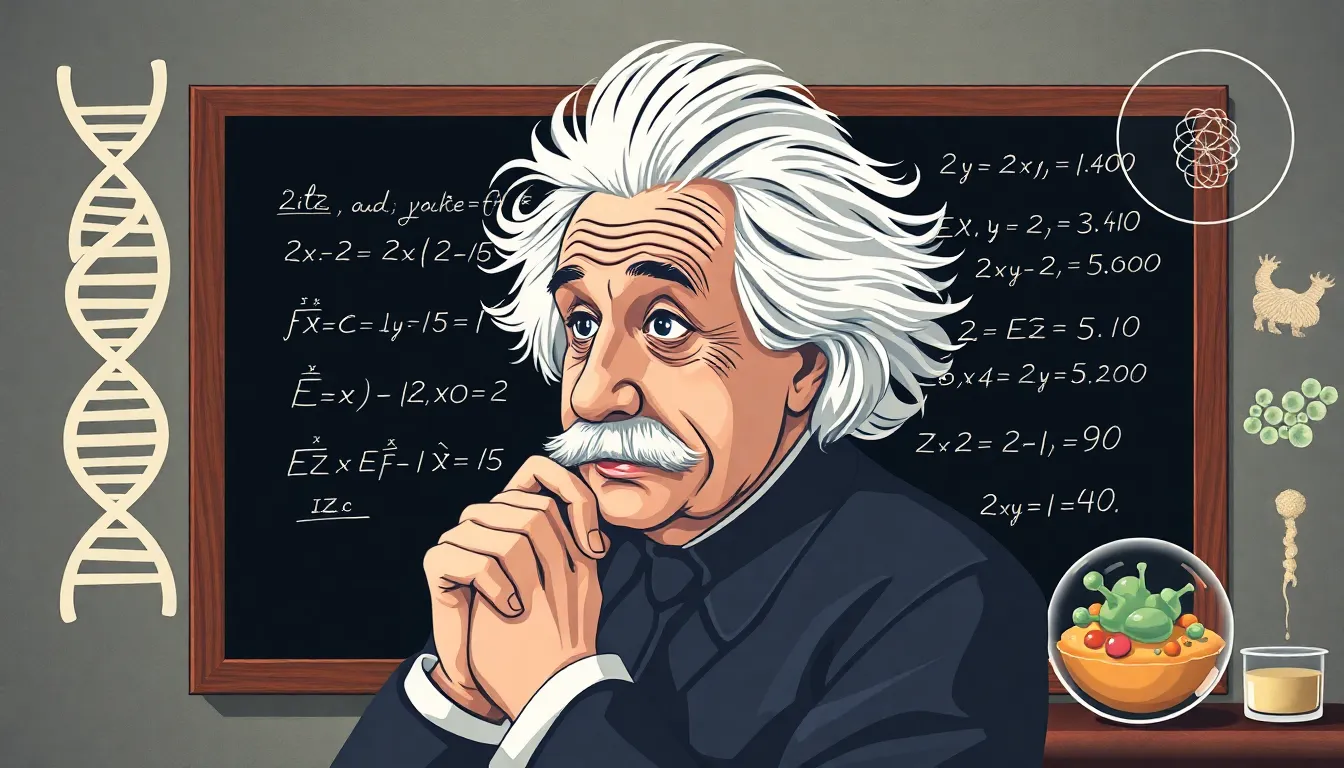
Significant discoveries have transformed our understanding of the universe and our place in it. Each breakthrough represents a leap in knowledge across various scientific fields.
The Theory of Relativity
Developed by Albert Einstein in the early 20th century, the Theory of Relativity fundamentally changed physics. This theory comprises two parts: special relativity and general relativity. Special relativity introduced the concept that time and space are interconnected. It proposed that the speed of light is constant, leading to insights about time dilation and mass-energy equivalence, expressed in the equation E=mc². General relativity, published in 1915, described gravity as a curvature in spacetime caused by mass. This framework enabled understanding of phenomena like black holes and gravitational waves.
The Discovery of Penicillin
In 1928, Alexander Fleming accidentally discovered penicillin, a breakthrough in medicine. The observation of mold inhibiting bacterial growth opened doors to antibiotics and revolutionized treatments for infectious diseases. Bacteria that were once deadly became treatable, significantly reducing mortality rates. Hospital deaths declined as infections were managed more effectively. Penicillin’s success set the stage for subsequent antibiotic development, laying the foundation for modern medicine.
The Structure of DNA
James Watson and Francis Crick revealed the double-helix structure of DNA in 1953, a milestone in biology. This discovery explained how genetic information is stored and replicated. The arrangement of nucleotide bases—adenine, thymine, cytosine, and guanine—provides the code for building proteins, which are essential for life. Understanding DNA structure enhanced insights into heredity, evolution, and genetic disorders. This breakthrough continues to influence fields like genetics and biotechnology, leading to advancements such as gene therapy.
Recent Science Discoveries
Recent discoveries continue to reshape scientific landscapes and deepen understanding across various fields.
Advancements in Quantum Computing
Quantum computing technology progresses rapidly, promising increased computational power. Researchers demonstrated quantum supremacy, where a quantum computer solved problems beyond the capability of classical computers. Companies like Google and IBM lead the charge, developing quantum systems that tackle complex challenges in cryptography and optimization. Breakthroughs in error correction also enhance stability and efficacy, making quantum computing more practical. Applications may soon extend to drug discovery and material science, revolutionizing industries by providing faster solutions to intricate problems.
Breakthroughs in Genetic Engineering
Genetic engineering sees significant advancements, particularly with CRISPR technology. This technique allows precise edits to DNA, enabling genetic modifications with unprecedented accuracy. Scientists developed new CRISPR systems that can target multiple genes simultaneously, streamlining complex genetic studies. Researchers focus on potential treatments for genetic disorders, with promising trials emerging for conditions like sickle cell anemia. Additionally, agricultural innovations involve engineered crops exhibiting resistance to pests and drought, addressing global food security concerns. Continued progress ensures genetic engineering remains at the forefront of scientific discovery.
The Impact of Science Discoveries on Society
Science discoveries profoundly influence society in various ways, shaping technology, and addressing environmental challenges. Advancements in multiple fields continually transform daily life and the global landscape.
Technological Innovations
Significant progress in scientific research fuels technological innovations. Artificial intelligence and machine learning algorithms enhance data analysis and improve decision-making processes across industries. Furthermore, breakthroughs in renewable energy technologies, such as advanced solar panels and wind turbines, drive the shift toward sustainable energy sources. Mobile applications enable instant access to health information, transforming healthcare delivery. Overall, these innovations improve quality of life and create new opportunities for growth.
Environmental Implications
Scientific discoveries play a critical role in tackling environmental issues. Research on climate change informs policies for reducing greenhouse gas emissions. Insights from ecology help protect endangered species and restore natural habitats. Additionally, advancements in sustainable agriculture minimize chemical usage and increase food security. Innovative clean technologies, such as bioremediation, clean up contaminated sites and restore ecosystems. Timely action based on scientific findings fosters a healthier environment for future generations.
Scientific discoveries continually reshape humanity’s understanding of the world. They challenge existing knowledge and inspire new questions. From groundbreaking technologies in quantum computing to revolutionary advancements in genetic engineering, each discovery holds the potential to transform lives.
The influence of these discoveries extends into everyday life, impacting health, technology, and the environment. By embracing the unpredictable nature of science, society can harness its power to address pressing issues and pave the way for future innovations. As researchers explore the unknown, the journey of discovery remains as vital as the findings themselves, ensuring a brighter and more informed future for all.